

Building a successful Android application starts with choosing the right developer, but many businesses struggle at this stage. They often focus only on finding someone who can write code, without considering whether that developer understands their business goals, customer needs, user experience, security requirements, and future growth plans. Choosing the wrong Android app developer can lead to delayed launches, poor app performance, unexpected costs, and a product that fails to deliver the intended results.
The right hiring decision requires more than checking technical skills. Businesses need a developer or development partner who can understand the app idea, recommend suitable technologies, create a smooth user experience, test the application properly, and provide support after launch. By evaluating requirements, development experience, portfolio quality, communication, and long-term support capabilities, businesses can choose an Android app developer who can turn their idea into a reliable mobile solution.
Why Hiring the Right Android App Developer Matters
An Android app represents a direct connection between a business and its customers. The quality of the application affects how users interact with the brand, how smoothly they complete tasks, and whether they continue using the product. A poorly developed application can create frustration through slow performance, confusing navigation, crashes, or security concerns.
Hiring the right Android app developer helps businesses create an application that supports both user expectations and business objectives. A skilled developer considers technical requirements, performance, scalability, and future updates instead of focusing only on completing the initial version of the app.
For startups and established companies, the developer selection process can influence the entire lifecycle of the application. A strong development foundation makes it easier to add new features, improve performance, and adapt as customer needs change.
A Developer Choice Impacts Your App Beyond Development
Many businesses view an Android developer as someone responsible only for writing code. However, professional app development involves many decisions that affect the final product. A developer influences important areas such as application structure, loading speed, security, database management, and compatibility with different Android devices. Poor technical decisions during development can create problems later that are expensive and time-consuming to fix.
An experienced Android app developer understands how different components work together, including the user interface, backend services, APIs, and device capabilities. This broader understanding helps create applications that provide a better experience for users and remain easier to maintain.
Poor Developer Selection Can Increase Long-Term Costs
Choosing an Android developer based only on the lowest price can create additional expenses in the future. Poor-quality code, limited testing, and weak planning can result in frequent bugs, performance problems, and expensive redevelopment. Businesses should consider the overall value a developer provides rather than only the initial development cost. A professional developer helps reduce risks by following proper development practices, testing the application, and creating a foundation that supports future improvements.
Define Your Android App Requirements Before Hiring
Before searching for an Android app developer, businesses should have a clear understanding of what they want to build. Developers can provide better solutions when they understand the purpose of the application, target users, required features, and business objectives. A clear project definition also helps businesses compare developers more effectively because they can evaluate whether a developer has experience with similar applications.
Define Your App Goals, Users, and Features
The first step is understanding why the application is being created. Businesses should identify the problem the app will solve and the type of users who will benefit from it. For example, an e-commerce application may focus on product browsing, payments, and customer accounts, while a service-based application may require booking features, notifications, and customer communication tools.
Before hiring a developer, consider:
- What problem will the app solve?
- Who are the target users?
- What actions should users complete?
- What features are essential for the first version?
- What features may be added later?
Many businesses start with a Minimum Viable Product (MVP), which includes the most important features needed to test the idea. This approach allows companies to launch faster, collect user feedback, and improve the application based on real usage.
Decide Your Development Approach
Businesses should also understand which development approach fits their project. The choice between native Android development and cross-platform development depends on goals, budget, performance requirements, and future plans. Native Android development focuses specifically on Android devices and commonly uses technologies such as Kotlin and Java. It can provide excellent performance and access to Android-specific features.
Cross-platform development allows businesses to build applications that work across multiple platforms using technologies such as Flutter or React Native. This approach can be useful for businesses that want to launch on Android and iOS while reducing development time. The right choice depends on the application requirements. A professional Android app developer can help businesses choose an approach that matches their goals.
Choose the Right Android Developer Hiring Option
Businesses have different options when hiring Android developers. The best choice depends on project size, budget, timeline, and the level of support required.
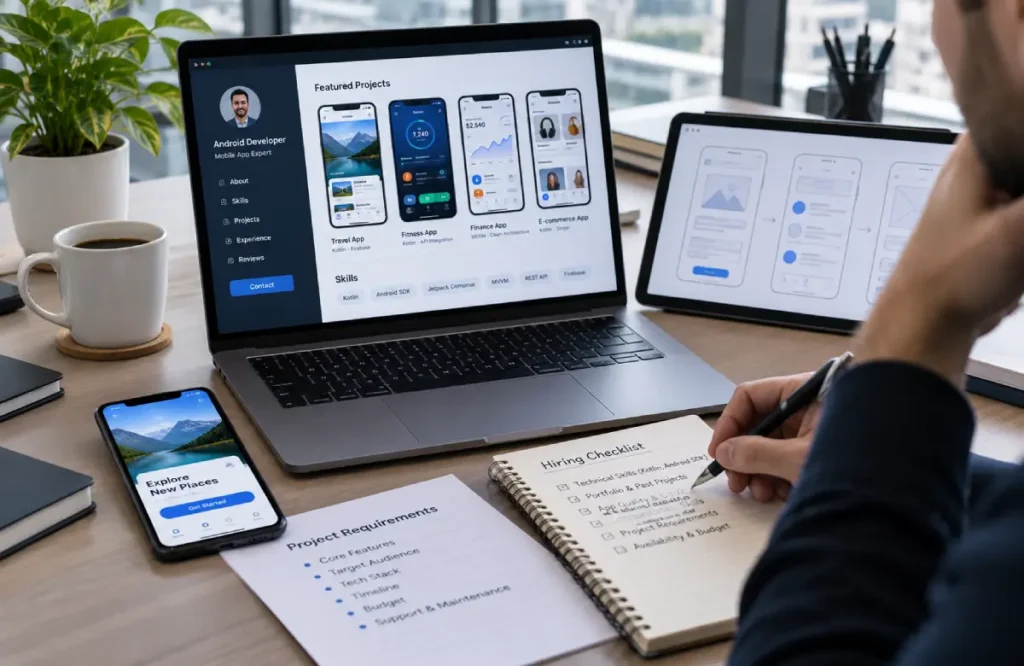
Freelance Android Developer
Freelance developers can be suitable for smaller projects, MVP development, or specific feature improvements. They often provide flexibility and may work well for businesses with clearly defined requirements. However, freelancers may have limited availability and may not provide all the skills needed for larger applications. Complex projects often require additional expertise in areas such as design, backend development, testing, and project management. Businesses choosing a freelancer should carefully review previous projects and communication processes before starting.
In-House Android Developer
Hiring an in-house developer means bringing a developer into the company team. This option can work well for businesses that need continuous app development and want direct daily collaboration. An internal developer becomes familiar with the product and company goals over time. However, this approach requires investment in salaries, hiring processes, management, and additional resources. For companies building a long-term technology team, an in-house developer may be a suitable choice.
Android App Development Company
An Android app development company provides a complete team approach. Instead of relying on one person, businesses can access different professionals, including Android developers, UI/UX designers, backend specialists, testers, and project managers. This option is often useful for businesses that need a complete solution from planning to launch. A development company can help manage the entire process, maintain quality standards, and provide ongoing support. Nexaryl helps businesses build Android applications by combining development expertise, user-focused design, and technical support to create reliable mobile solutions.
Skills to Look for When Hiring an Android App Developer
Technical skills are an important part of evaluating an Android developer, but businesses should focus on practical experience and the ability to build applications that solve real problems.
Android Development Skills
A professional Android developer should understand core Android development technologies, including Kotlin, Java, Android SDK, and Android Studio. Kotlin has become a widely used language for modern Android applications because it provides features that help developers write cleaner and more efficient code. Java remains important because many existing Android applications are built using it. Knowledge of Android Studio and Android SDK allows developers to create, test, debug, and optimize applications effectively.
UI/UX and Frontend Development Skills
A successful mobile application needs more than technical functionality. Users expect applications that are simple, intuitive, and easy to navigate. Android developers should understand interface development principles, including responsive layouts, Material Design guidelines, and modern UI technologies such as Jetpack Compose. Good UI/UX knowledge helps developers create applications that users can understand quickly and enjoy using.
Backend Integration and Database Knowledge
Many Android applications depend on backend systems to manage data, user accounts, payments, and communication. Developers should understand technologies such as APIs, Firebase, cloud services, and databases. This knowledge allows them to connect mobile applications with the required services and create smooth user experiences.
Security and Testing Experience
Security and testing are important parts of professional app development. A developer should understand how to protect user information, manage authentication, identify bugs, and improve application performance. Testing helps ensure the application works properly across different devices and Android versions before reaching customers.
How to Evaluate an Android App Developer Before Hiring
Before making a final decision, businesses should carefully evaluate a developer’s experience and working approach. A strong portfolio and clear communication can provide valuable insight into whether the developer is suitable for the project.
Review Portfolio and Published Applications
A developer’s previous work shows their practical experience. Businesses should review applications they have created and look for projects similar to their own requirements.
Important factors include:
- App quality
- User interface
- Performance
- Reviews and ratings
- Industry experience
- Update history
Published applications on the Google Play Store can provide additional information about a developer’s ability to create and maintain real products.
Check Technical Ability and Problem-Solving Approach
A good developer should be able to explain how they approach challenges. Businesses can discuss previous projects, technical decisions, and how the developer handles issues during development. Understanding their problem-solving approach helps determine whether they can manage unexpected challenges during the project.
Evaluate Communication and Project Management
Clear communication is essential for successful app development. Developers should understand requirements, provide updates, explain progress, and communicate potential issues. A developer who maintains transparency throughout the project helps businesses stay informed and reduces misunderstandings.
Understand the Android App Development Process
Understanding the development process helps businesses evaluate whether a developer follows a professional approach.
Planning and Design Phase
The process usually begins with requirement analysis and planning. During this stage, businesses and developers define features, user requirements, technical needs, and project goals. The design phase includes creating user flows, wireframes, and interface concepts to ensure the application provides a clear user experience.
Development and Testing Phase
During development, programmers build the application features, integrate necessary services, and connect backend systems. Testing is performed throughout the process to identify bugs, improve performance, and ensure the application works correctly across different devices.
Launch and Maintenance Phase
After testing, the application can be prepared for release on the Google Play Store. However, development does not end after launch. Applications require ongoing maintenance, security updates, compatibility improvements, and new features based on user feedback.
How Much Does It Cost to Hire an Android App Developer?
The cost of hiring an Android app developer depends on several factors, including application complexity, required features, developer experience, and project timeline. A simple application with basic features will usually require less investment than a complex application involving advanced functionality such as payments, real-time communication, artificial intelligence, or custom integrations.
Other factors affecting cost include:
- UI/UX design requirements
- Backend development
- Third-party integrations
- Testing requirements
- Post-launch support
Android Development Pricing Models
Businesses usually choose between different pricing models. Hourly pricing allows businesses to pay based on development time and can work well for ongoing improvements. Fixed project pricing provides a defined budget for projects with clear requirements. Dedicated developer models provide continuous development support for businesses that need regular improvements. The right pricing model depends on project scope and business needs.
Android Developer vs Android App Development Company: Which Should You Choose?
The choice between a freelancer, in-house developer, and development company depends on the project requirements.
| Option | Best For |
| Freelancer | Small applications and limited projects |
| In-house Developer | Companies needing internal development |
| Development Company | Complete applications and professional support |
Businesses should consider project complexity, required expertise, budget, and future maintenance needs before choosing a hiring option. For businesses that need complete guidance, working with an experienced Android app development company can provide access to multiple skills under one team.
Common Mistakes Businesses Make When Hiring Android Developers
Choosing the Cheapest Developer
Price is an important factor, but choosing only based on cost can create problems later. Low-quality development may lead to performance issues, security concerns, and additional expenses.
Ignoring Portfolio Verification
Businesses should always review previous work instead of relying only on claims. Real applications demonstrate practical ability and experience.
Not Discussing Maintenance and Ownership
Many businesses focus only on launch and ignore future requirements. Before hiring, companies should discuss source code ownership, updates, maintenance, and support.
Questions to Ask Before Hiring an Android App Developer
Before starting a project, businesses should ask questions that help evaluate technical ability and reliability.
Important questions include:
- How many Android applications have you developed?
- Which technologies do you use for Android development?
- Can you share previous projects?
- How do you test applications?
- How do you handle security?
- What support is provided after launch?
- How do you manage project updates and changes?
These questions help businesses understand whether a developer can meet their expectations.
Why Choose Nexaryl for Android App Development?
Choosing the right development partner can make the app development process smoother and more effective. Nexaryl helps businesses transform their ideas into professional Android applications through planning, development, design, testing, and ongoing support.
Our approach focuses on understanding business goals, creating user-friendly applications, and building solutions that support long-term growth. Whether you need an MVP, a customer-facing application, or a complete mobile solution, Nexaryl provides the expertise needed to bring your idea to life.
Frequently Asked Questions About Hiring Android App Developers
How much does it cost to hire an Android app developer?
The cost depends on app complexity, features, development time, developer experience, and support requirements.
How long does Android app development take?
The timeline depends on the application’s features, design requirements, testing process, and overall complexity.
Should I hire a freelancer or an Android app development company?
Freelancers can work well for smaller projects, while development companies are often suitable for businesses requiring complete solutions and ongoing support.
What skills should an Android developer have?
A professional Android developer should understand Kotlin, Java, Android SDK, UI/UX principles, APIs, databases, testing, and security practices.
How can I verify an Android developer’s experience?
Review their portfolio, published applications, client feedback, technical knowledge, and previous projects related to your industry.
Conclusion: Choose an Android Developer Who Understands Your Business
Hiring an Android app developer is an important decision that can influence the success of your mobile application. The right developer should understand your business goals, create a reliable user experience, follow professional development practices, and provide support after launch. Businesses should evaluate requirements, hiring options, technical skills, portfolio quality, communication, and long-term support before making a decision.
Nexaryl helps businesses build professional Android applications through strategic planning, modern development practices, and creative mobile solutions. If you are ready to turn your app idea into a reliable product, our team can help you create an Android application that supports your business goals.